If you’ve ever stood in the middle of an event center, staring at a clipboard and wondering how two groups were booked into the same room at the same time, you haven’t failed. You are simply experiencing the limits of human biology. Event planning is one of the most stressful jobs in the world because it demands a level of multi-threaded processing that the human brain simply wasn’t designed to handle on its own.
While we like to think of ourselves as master multitaskers, the reality of our cognitive machinery tells a different story. Understanding the psychology behind these limitations explains why spreadsheets and sticky notes eventually fail—and why dedicated scheduling tools are not a luxury but a cognitive necessity.
TL;DR Key Takeaways:
- Our so-called working memory can only hold a small amount of information at once, making complex scheduling physically difficult to track without help.
- A psychological phenomenon called the "planning fallacy" causes us to consistently underestimate how long tasks will take.
- The effectiveness of multitasking is a myth. Switching between tasks reduces efficiency and focus, which is why relying on a centralized tool is more effective than juggling spreadsheets and emails.
- Dedicated scheduling solutions like Mazévo act as an external hard drive for your brain, reducing the user’s cognitive burden so they can focus on strategy and execution.
The Limits of Working Memory
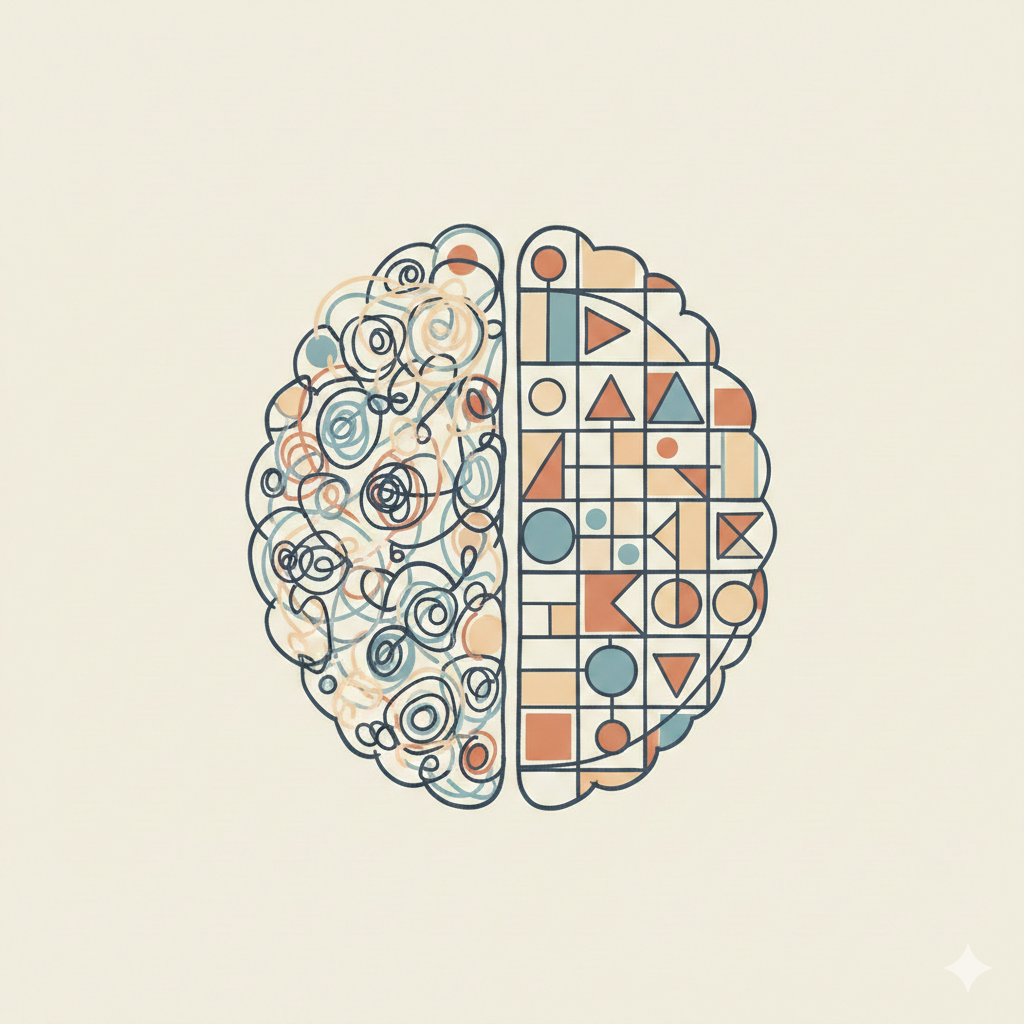
One of the human brain’s limiting factors is called "cognitive load," a concept that refers to the amount of working memory being used at any given time. Psychologists have determined that the average human brain can only hold about four "chunks" of new information simultaneously.
In the context of scheduling for a university, church, corporation, or other organization, you are rarely dealing with just four chunks. Most would say “never”! You’re managing room capacities, AV requirements, catering menus, setup times, client communication, and more.
When the input exceeds that four-chunk limit, your brain begins to drop data. This isn't a lack of skill or attention to detail. It is an unavoidable overflow of your working memory's buffer. Without a system to store that excess data, details inevitably slip through the cracks.
The Optimism Trap
Even when we write things down, our brains often trick us during the scheduling process. This is known as the "planning fallacy," a cognitive bias that causes us to consistently underestimate the time, costs, and risks of future actions.
We instinctively plan for the best-case scenario, believing the keynote speaker will finish exactly on time, the teardown crew will work at peak efficiency, and the hallways will clear instantly. We fail to account for the friction of reality—the lost power cord, the spill in the lobby, or the conversation that runs long. A robust scheduling tool counters this psychological bias by enforcing buffer times and standard setup durations, saving us from our own optimism.
The High Cost of Task Switching
Event planners are often praised for their ability to multitask, but psychology suggests that true multitasking is a myth. What we are actually doing is "task switching," rapidly shifting our focus from one thing to another. And every time you switch from answering an email to checking a room diagram, your brain pays a "switching cost."
This constant toggling drains your mental energy and reduces your ability to focus. When you rely on an ad hoc “system” made up of individual tools—an Outlook calendar for dates, a spreadsheet for catering, and a binder for invoices—you force your brain to pay that switching cost hundreds of times a day. A centralized scheduling system eliminates this drain by keeping all that data in one place, allowing you to stay in a "flow state" longer.
Decision Fatigue and the Need for "Cognitive Prosthetics"
Have you ever found yourself in the late afternoon unable to decide something as simple as what to eat for dinner? This is "decision fatigue." The quality of your decisions deteriorates after a long session of making choices.
Event scheduling involves thousands of micro-decisions. A scheduling solution acts as what you might call a “cognitive prosthetic.” It extends your mind's capabilities by automating certain decisions and actions (like identifying a double booking risk or applying a pricing rule) so you can save your high-level brainpower for creative problem-solving.
How Mazévo Offloads Cognitive Burden
The most effective way to combat our psychological limitations is to offload data storage and logic processing to a system designed for it. Mazévo serves as that external brain.
- It creates a single source of truth. By consolidating every detail on one cloud-based platform, you eliminate the switching costs associated with hunting for information across different apps.
- It enforces logic. The system automatically catches conflicts and enforces resource rules, protecting you from the cognitive overload that leads to double bookings and other mistakes.
- It enables access everywhere. Because it is mobile-friendly, you don't have to "hold" information in your working memory until you get back to your desk. You can input it immediately.
By respecting your brain’s limits and using the right tools, you can move from a state of constant cognitive triage to one of strategic calm.
Learn more about how Mazévo can help you reduce decision fatigue and cognitive overload in a live demonstration tailored to your organization’s needs, or contact us with questions.